How Do Scientists Measure Differences Between Humpback Whale Songs From Individual Whales?
Humpback whales produce some of the most complex vocal displays in the ocean. Their songs contain repeated sounds, organized phrases, and sequences that can change over time. Although whales within a population may share many song features, researchers can also observe variation in the sounds produced by different singers.
Understanding these differences helps scientists investigate vocal behavior, compare recordings, and explore how humpback whales communicate. It also raises an important question: can researchers determine which individual whale produced a particular song by examining its acoustic characteristics?
The answer requires careful analysis. Scientists can measure differences between recordings, but a difference in sound does not automatically identify a particular whale. Reliable conclusions depend on repeated observations, recording quality, and evidence connecting sounds to known individuals.
For people interested in Samaná whale watching in the Dominican Republic, this research offers another way to understand the animals that visit the region during the breeding season.
Why Do Scientists Compare Individual Whale Songs?
Comparing whale songs helps researchers investigate how vocal behavior varies between individuals, groups, and seasons.
Some differences may relate to the structure of a song, while others may reflect how a whale produces a particular sound. Researchers can examine pitch, duration, frequency patterns, and the arrangement of repeated units.
These comparisons can help address several questions:
- Do different singers produce measurably different acoustic patterns?
- Does an individual produce similar vocalizations across multiple recording sessions?
- Are some differences temporary, while others persist over time?
- Can acoustic observations be linked reliably to visually identified whales?
- How much variation exists within a population or recording period?
Answering these questions requires scientists to distinguish genuine biological variation from differences caused by environmental conditions or recording equipment.
1. Collecting High-Quality Underwater Recordings
The first step is obtaining recordings suitable for comparison.
Scientists commonly use hydrophones, which are underwater microphones designed to capture sound. Depending on the research design, these devices may be deployed from a vessel, attached to a mooring, or used in other appropriate recording arrangements.
Researchers must document important details, including recording time, location, equipment settings, and environmental conditions where possible.
These details matter because the same whale can sound different across recordings even when its vocal behavior has not changed substantially. Distance from the hydrophone, background noise, water conditions, and the position of the recording device can all influence the signal.
For example, a distant singer may sound quieter or less clear than a nearby singer. Scientists must avoid interpreting every difference in loudness as a difference between individual whales.
Good recording practices provide the foundation for meaningful acoustic comparisons.
2. Visualizing Songs With Spectrograms
A spectrogram is a visual representation of sound that displays how frequency changes over time. It allows researchers to examine features that may be difficult to compare consistently by listening alone.
In a spectrogram, time is typically displayed horizontally and frequency vertically. The strength of the recorded sound is represented through differences in visual intensity or color, depending on the software.
Scientists use spectrograms to examine features such as:
- The frequency range occupied by a sound.
- How pitch rises or falls during a vocal unit.
- The duration of individual sounds.
- The spacing between repeated units.
- The structure and timing of phrases.
Researchers can compare these features across recordings to quantify similarities and differences.
However, a spectrogram does not automatically reveal the identity of a whale. It provides evidence about the acoustic signal, which must be interpreted alongside other information.
3. Measuring Frequency and Pitch Patterns
Frequency is one of the acoustic properties researchers can measure when comparing whale vocalizations.
A sound may contain frequencies that change throughout its duration. Researchers can measure a fundamental frequency when it can be identified reliably, as well as other relevant spectral features.
They may compare the starting frequency, ending frequency, frequency range, or rate at which a sound changes pitch.
For example, two recordings may contain similar vocal units but show differences in their frequency contours. Scientists can quantify those differences and determine whether they are consistent across repeated samples.
It is important to distinguish frequency from perceived loudness. A change in frequency describes a change in the sound's oscillation rate, while loudness relates to the strength of the sound as received and perceived.
Researchers also account for recording quality and noise, which can make frequency measurements less reliable.
4. Comparing Sound Duration and Timing
The length of a vocal unit can provide another useful comparison feature.
Scientists measure how long a sound lasts, how much time separates successive units, and how phrases are organized. They may also examine repetition rates and pauses within a song.
Two singers could produce similar sound types but differ in their timing. Alternatively, the same individual might change its timing across different singing sessions.
To understand the significance of these differences, researchers need multiple recordings rather than isolated examples.
A single unusually short sound could result from overlapping vocalizations, background noise, or an uncertain boundary between units. Repeated measurements help reveal whether the observed variation is persistent or simply reflects recording limitations.
Timing measurements can be particularly useful when combined with frequency and structural features.
5. Studying Song Units and Phrase Structure
Humpback whale songs often contain recurring acoustic units arranged into phrases and larger sequences. Scientists can compare not only the individual sounds but also the way those sounds are organized.
For example, they may examine which units occur together, the order in which they appear, and how frequently a particular sequence repeats.
Researchers can then compare the structure of recordings made at different times or associated with different singers.
However, shared song structure does not necessarily mean two recordings came from the same whale. Humpback whale songs can include patterns shared by multiple singers, and those patterns may change as time passes.
Song structure is therefore useful for describing vocal behavior and comparing groups, but it must be interpreted carefully when the goal is individual identification.
6. Measuring Variation Within the Same Whale
Before deciding that an acoustic feature distinguishes one whale from another, scientists need to understand how much that feature varies within an individual.
A whale may produce vocalizations with slightly different timing or frequency characteristics across different sessions. Its song may also change as it continues singing or as the broader song pattern evolves.
Researchers can investigate this by comparing recordings associated with the same identified whale over multiple observations.
They then examine whether particular features remain reasonably stable or vary considerably.
This step is crucial. A feature that changes widely within one whale may be a poor identifier, even if it appears different between two selected recordings.
By measuring both within-individual and between-individual variation, scientists can assess whether an acoustic feature is useful for distinguishing singers.
7. Connecting Songs With Known Individuals
Acoustic comparisons become more informative when researchers can connect recordings to whales whose identities are independently established.
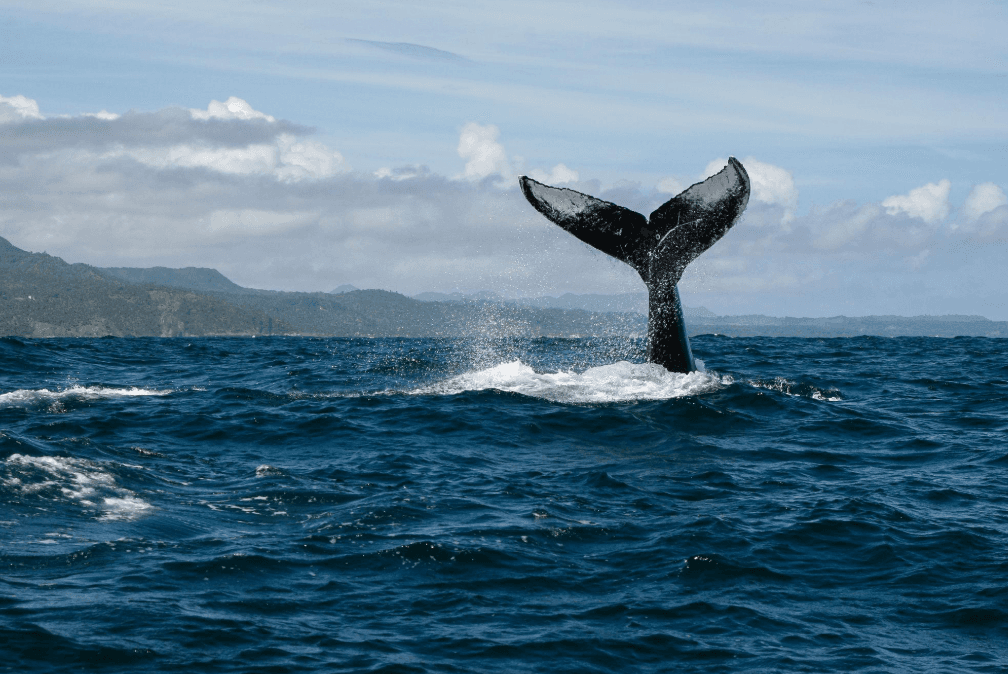
One established approach to identifying individual humpback whales is photo-identification. Researchers photograph the underside of a whale's tail fluke, which can display distinctive markings and patterns.
When photographs and acoustic recordings can be linked through carefully documented observations, researchers may be able to compare the vocal behavior of known individuals.
For example, if a visually identified whale is observed and recorded under suitable conditions, researchers can associate a vocal sample with that individual when the evidence supports the connection.
This process is not always straightforward. Several whales may be nearby, sounds may overlap, and the source of a vocalization may be difficult to establish from a vessel.
Scientists must therefore distinguish a recording made while a whale was present from a recording confidently attributed to that whale.
8. Using Statistical Methods to Compare Songs
Once researchers have extracted acoustic measurements, statistical methods can help evaluate patterns across recordings.
A dataset might include measurements of frequency, duration, phrase timing, and other features. Researchers can examine how much these measurements vary and whether certain combinations distinguish recordings associated with different individuals.
Depending on the research question, scientists may use multivariate analysis, clustering, classification methods, or other statistical techniques.
These tools can help reveal patterns that are difficult to detect by listening alone. Yet a statistical difference does not necessarily establish a biological explanation.
Researchers must consider sample size, the quality of individual labels, variation across sessions, and the possibility that the model is detecting recording conditions rather than genuine differences between whales.
Whenever automated classification is used, independent validation is important. A system should be tested on suitable recordings that were not used to build or tune it.
9. Can Artificial Intelligence Identify Individual Singers?
Machine-learning systems can analyze large acoustic datasets and identify recurring patterns. Depending on the data and research objective, these systems may help group similar vocalizations, classify song units, or investigate whether recordings contain information associated with individual singers.
However, a system that distinguishes two recordings is not necessarily identifying two different whales.
It may instead be detecting differences in background noise, microphone characteristics, recording distance, or the song sequences present in each sample.
To evaluate whether a model identifies individual whales, researchers need recordings with reliable identity labels and an appropriate testing strategy. Ideally, evaluation should include separate recording sessions so the system is not simply recognizing features specific to one recording.
AI can support research, but its predictions should not be treated as confirmed individual identities without adequate validation.
10. Separating Individual Differences From Shared Songs
One of the biggest challenges is that humpback whales may share song patterns.
If multiple whales produce similar units and sequences, those features may be useful for studying the wider vocal culture of a population but less useful for identifying one singer.
Researchers therefore need to distinguish two different questions:
Are these recordings acoustically similar? This asks whether their measurable sound features resemble one another.
Did the same whale produce both recordings? This asks about the identity of the vocalizer and requires additional evidence.
The first question can often be investigated through acoustic analysis. The second is more demanding because similar vocal behavior may be shared across many individuals.
Combining acoustic measurements with reliable individual observations can help clarify the distinction.
11. Applying These Methods to Research in Samaná Bay
Samaná Bay is an important seasonal destination for humpback whale watching. Its visiting whales provide opportunities for observation, but identifying individual singers through acoustic data requires a dedicated research design.
A study in the area could collect underwater recordings at documented times and locations, analyze song characteristics, and compare recordings across multiple sessions.
Where feasible, researchers could also collect photographs and behavioral observations to connect acoustic data with known whales. Repeated sampling would help determine whether particular features remain stable within an individual or vary across sessions.
Scientists would need to consider boat noise, overlapping singers, recording distance, and differences in equipment. They would also need enough verified observations to support any conclusions about individual identity.
Unless suitable local data are available, it would be inappropriate to claim that particular acoustic signatures have already been confirmed for individual whales in Samaná Bay.
These methods describe how such research could be conducted, rather than asserting that a specific local study has produced those findings.
12. Why These Comparisons Matter for Whale Conservation
Understanding individual vocal variation can contribute to broader research on humpback whale communication and behavior.
Reliable acoustic data may help scientists study how whales use sound, how vocal patterns vary between groups, and whether certain behaviors change across seasons.
When recordings are linked to known individuals, researchers may also investigate how vocal behavior relates to movement, social encounters, and repeated visits to particular areas.
Nevertheless, acoustic monitoring is not a complete substitute for other research methods. Photo-identification, visual observations, movement data, and environmental measurements can provide complementary evidence.
Combining these approaches allows scientists to develop a more complete picture of whale behavior while acknowledging the limits of each method.
For responsible whale watching, this research also reinforces the importance of minimizing disturbance and following local wildlife-viewing rules.
Conclusion
Scientists measure differences between individual humpback whale songs by analyzing frequency, duration, timing, phrase structure, and other acoustic features. They use spectrograms, statistical analysis, repeated recordings, and sometimes machine-learning tools to investigate patterns across vocal samples.
The most important challenge is distinguishing genuine individual variation from changes caused by shared song patterns, environmental conditions, and recording equipment.
Acoustic similarity alone cannot prove that the same whale produced two recordings. Stronger conclusions require reliable individual identification, repeated observations, and careful validation.
For those interested in Samaná whale watching, these methods reveal how scientists can investigate the underwater communication of humpback whales beyond what visitors can observe from the surface. They also show why high-quality recordings and cautious interpretation are essential to understanding these remarkable marine mammals.

Local explorer & expert guide in Samana Whale Watching Tour.