How Does Water Clarity Affect Humpback Whale Sightings in Samaná Bay?
Samaná Bay in the Dominican Republic is famous for its seasonal humpback whale encounters. Visitors travel to this coastal region to see whales surfacing, exhaling, diving, and sometimes displaying spectacular behaviors. Yet the appearance of the ocean can vary from one day to another, raising an interesting question: does water clarity affect how easily visitors can see humpback whales?
Water clarity influences how far people can see beneath the surface. It depends on factors such as suspended particles, microscopic organisms, water depth, and available sunlight. These conditions can change the underwater view, but they do not necessarily determine whether a whale will be visible when it surfaces.
Understanding the difference between underwater visibility and surface sightings helps travelers set realistic expectations before joining a whale-watching excursion.
What Is Water Clarity?
Water clarity describes how easily light passes through water and how far an observer can see into it.
Clear water generally allows more light to penetrate, making underwater objects easier to distinguish. Water containing suspended sediment, plankton, or other particles can scatter or absorb light, reducing visibility.
Clarity is not the same as water color. Blue, green, and turquoise water can all have different levels of transparency, depending on the substances present and the way light interacts with the water.
For example, water may look bright turquoise near a beach but contain enough suspended material to limit how far someone can see underwater.
During whale watching, these differences are relevant because visitors observe a large marine animal moving between the surface and the water below.
Does Clear Water Make Humpback Whales Easier to See?
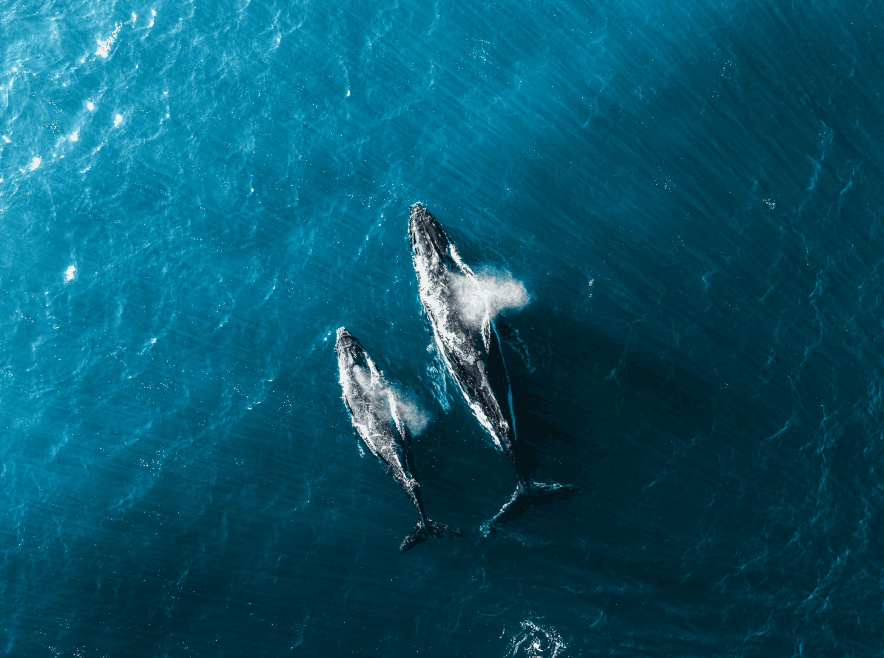
Clear water can make it easier to see a whale when the animal is underwater and within the range of available light. However, whale-watching sightings often depend more on what happens at the surface.
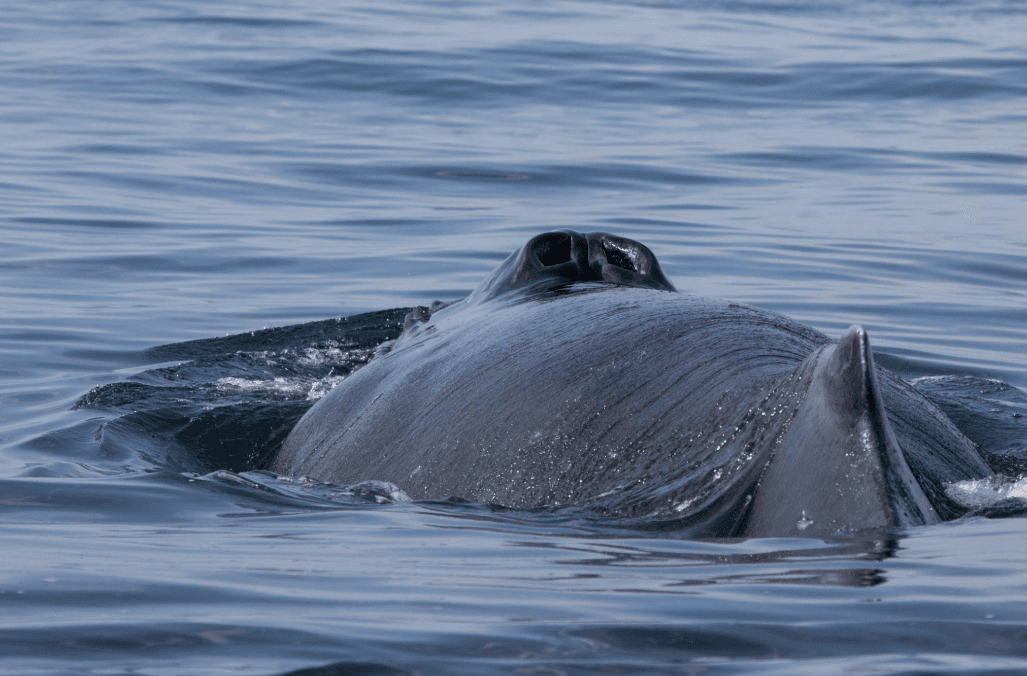
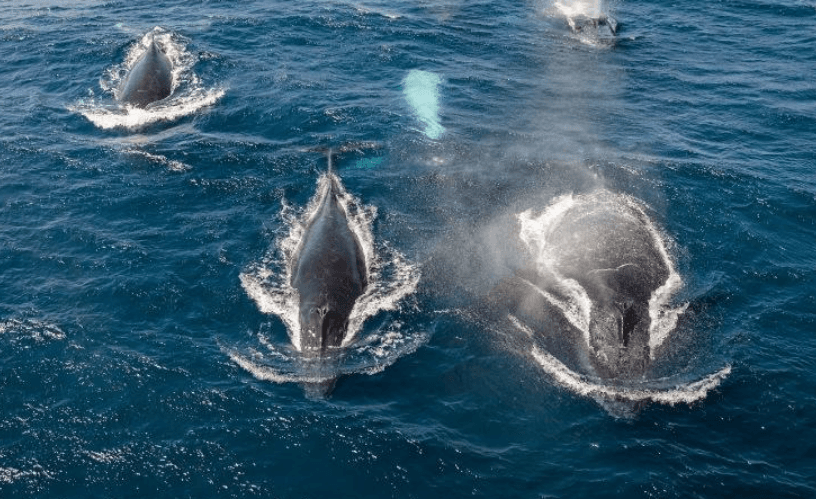
A humpback whale may become visible when its back emerges, its blow rises above the water, or its tail flukes appear before a dive. These features can be observed even when underwater visibility is limited.
Consequently, clear water does not guarantee more whale sightings, and cloudy or less transparent water does not automatically mean a poor whale-watching experience.
The number of whales in the area, their behavior, their surfacing intervals, weather conditions, and the observer's position all affect the likelihood of seeing them.
Why Does Water Clarity Change?
Several environmental factors can affect the clarity of Samaná Bay's coastal waters.
1. Suspended sediment
Small particles of sand, silt, and other material can enter the water through natural erosion, runoff, or wave action.
When these particles remain suspended, they scatter light and reduce underwater visibility. Their effects are often more noticeable in shallow coastal areas than in some offshore locations.
2. Plankton and microscopic organisms
Plankton forms an important part of marine ecosystems. Depending on the types and concentrations present, plankton can influence the color and transparency of seawater.
A change in water clarity caused by plankton does not necessarily indicate pollution. Some changes reflect natural biological processes.
3. Waves and currents
Waves can stir up particles in shallow areas, while currents can transport suspended material from one location to another.
The resulting clarity may vary across the bay and over time. Conditions observed near the coast may differ from those farther offshore.
4. Rainfall and runoff
Heavy rainfall can carry soil and organic material into coastal waters through rivers, streams, and surface runoff.
Depending on local conditions, this can temporarily reduce transparency. The degree of change depends on rainfall intensity, land conditions, currents, and other factors.
5. Sunlight and cloud cover
Sunlight affects how clearly people can see objects at or beneath the surface. Bright conditions may make surface features easier to distinguish, while cloud cover can reduce the available light.
However, sunlight does not remove suspended particles. Water clarity and illumination are related but separate factors.
How Water Clarity Affects Underwater Whale Photography
Water clarity can make a significant difference for photographers hoping to capture a humpback whale below the surface.
When water is transparent and light is sufficient, underwater images may reveal more details of the whale's body, skin texture, and movements. In murkier water, suspended particles can reduce contrast and make the animal appear less distinct.
Photographers also need to consider how quickly light decreases underwater. Even relatively clear water can become dark at greater depths, especially when sunlight is weak.
For ordinary whale-watching trips, however, underwater photography may not be permitted or practical. Visitors should follow the operator's rules and never enter the water with whales unless an activity is specifically authorized and conducted under applicable regulations.
For most travelers, surface photography provides a more realistic way to document a whale encounter.
Can You See a Whale Through Murky Water?
A humpback whale may still be easy to spot when the water below the surface is cloudy or less transparent.
The animal's blow, back, dorsal fin, and tail flukes can become visible above the waterline. These surface features do not require the observer to see deeply into the ocean.
The challenge is different when the whale remains submerged. Reduced clarity can make it harder to distinguish the animal's shape or follow its underwater movement.
This explains why a whale can be clearly visible one moment and disappear from view the next. It may have submerged, changed direction, or moved beyond the range of visibility.
Does Water Clarity Affect Where Humpback Whales Go?
Water clarity can be one characteristic of a whale's habitat, but it should not be treated as a proven direct cause of whale movement without supporting evidence.
Humpback whales use different marine environments according to their seasonal activities, individual behavior, and ecological needs. During the breeding season, the waters around Samaná provide opportunities for mating, calving, and other behaviors associated with their seasonal presence.
A whale moving away from an observation point does not necessarily mean that it dislikes the water clarity. Its movement may have nothing to do with visibility.
Scientists investigating habitat use need to compare whale locations with environmental measurements and consider several potential explanations rather than relying on water appearance alone.
How Can You Judge Water Conditions Before a Whale-Watching Trip?
Travelers can observe several visible features when arriving at the departure point.
- Surface appearance: Notice whether the water looks transparent, cloudy, or affected by suspended material.
- Lighting: Consider whether sunlight or cloud cover may affect the visibility of surface features.
- Sea conditions: Waves and surface movement can make it harder to distinguish a whale at a distance.
- Guide information: Ask local guides about the day's conditions, while remembering that visibility cannot predict whether whales will appear.
These observations can help you understand the conditions without treating water color as a reliable forecast of whale activity.
Why Water Clarity Matters for Marine Conservation
Water transparency can provide useful information about the physical and biological conditions of coastal ecosystems. Repeated measurements may help researchers investigate changes in sediment, plankton, and other environmental characteristics.
However, clarity alone cannot establish whether a marine environment is healthy. Some naturally productive waters contain substantial plankton, while other problems may be present even when water looks clear.
Assessing marine ecosystem health requires a broader range of evidence, including water chemistry, habitat conditions, biodiversity, and possible pollution sources.
Protecting the coastal environment around Samaná Bay benefits the wider marine ecosystem and supports the long-term value of responsible wildlife tourism.
Frequently Asked Questions
Is the water always clear in Samaná Bay?
No. Water clarity varies with location, weather, currents, suspended particles, and biological conditions. The appearance of the bay can change from one day to another.
Is clear water the best condition for seeing humpback whales?
Clear water may improve underwater visibility, but surface sightings also depend on whale behavior, sea conditions, lighting, and the observer's position. Clear water does not guarantee a sighting.
Why does a whale disappear even when the water looks clear?
The whale may have submerged or moved outside the observer's line of sight. Even transparent water does not allow people to see indefinitely into the ocean.
Does green or cloudy water mean the sea is polluted?
Not necessarily. Plankton, sediment, and natural water movement can affect color and transparency. Determining whether pollution is present requires additional evidence.
Can water clarity be used to predict whale sightings?
Not reliably on its own. Whale sightings depend on multiple factors, including the presence and behavior of whales and the conditions affecting observation.
What should I bring for whale watching in Samaná Bay?
Bring sun protection, suitable clothing, and a camera or binoculars if desired. Follow your operator's advice about sea conditions, safety equipment, and photography.
Conclusion
Water clarity influences how far people can see beneath the ocean surface, but it is only one part of the whale-watching experience in Samaná Bay.
Suspended sediment, plankton, currents, rainfall, and sunlight can all affect the appearance of the water. These changes may influence underwater photography and the visibility of submerged whales, while surface behaviors can remain observable in less transparent conditions.
For visitors, the most important lesson is that clear water does not guarantee whale sightings, and cloudy water does not mean whales are absent. Patience, suitable conditions, and responsible observation matter far more than judging the ocean by its color alone.
By understanding water clarity, travelers can appreciate the changing marine environment around Samaná Bay and enjoy a more informed whale-watching experience.

Local explorer & expert guide in Samana Whale Watching Tour.