The Mangrove Ecosystem of Los Haitises National Park: How Coastal Forests Support Marine Life
The mangrove forests of Los Haitises National Park are among the most important natural features of its coastal environment. Growing along sheltered shores, river mouths, tidal channels and protected bays, these unusual forests form a connection between land and water. Their roots extend into muddy, waterlogged ground, while their branches and leaves create a green canopy above the channels.
At first glance, mangroves may look like ordinary coastal trees growing in shallow water. In reality, they form a highly specialized ecosystem. Their roots provide shelter for aquatic organisms, fallen leaves contribute to natural food cycles, and dense vegetation helps stabilize the shoreline.
In Los Haitises, mangroves are especially important because they exist alongside rivers, wetlands, limestone formations and the coastal waters of Samaná Bay. Together, these habitats support a complex natural environment.
This guide explains how the mangrove ecosystem works, which plants form its forests, how it supports marine life, and why protecting these coastal forests matters.
1. What Makes the Mangrove Ecosystem of Los Haitises Special?
Mangroves are groups of salt-tolerant trees and shrubs adapted to coastal environments where ordinary land plants often struggle to survive. They can grow in areas affected by tides, changing salinity, soft sediment and periodic flooding.
Los Haitises contains mangrove forests in several coastal settings. A scientific study conducted in the park at the western end of Samaná Bay examined a forest near the mouths of the Yuna and Barracote rivers. The researchers identified red mangrove as the dominant species, alongside white mangrove and smaller amounts of black mangrove.
The park's management plan also describes mangroves in areas including the Barracote River mouth, San Lorenzo Bay, Caño Hondo River and Boca del Infierno. These locations illustrate how mangrove forests occupy different parts of the park's coastal landscape.
What makes these forests especially valuable is their position between freshwater and seawater environments. River flows bring freshwater and material from inland areas, while tides bring seawater into coastal channels. Mangrove vegetation grows within this changing environment and provides habitat for organisms adapted to it.
2. The Main Mangrove Trees Found in Los Haitises
Several mangrove-forming trees are associated with the park. Each has different characteristics and may occupy different parts of the coastal environment.
Red mangrove (Rhizophora mangle)
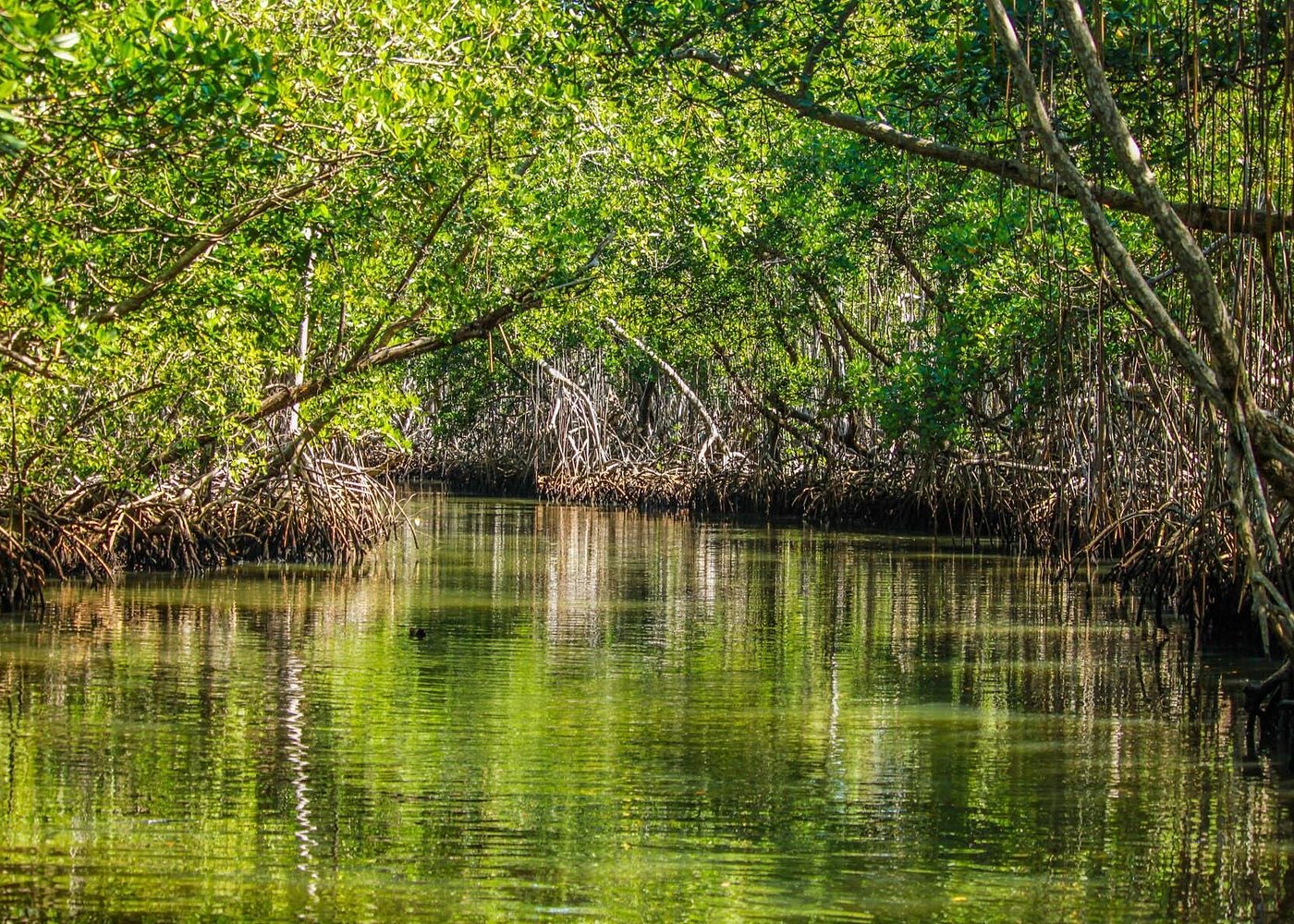
Red mangrove is an important species in Los Haitises. It is particularly recognizable because of its arching prop roots, which extend from the trunk and branches toward the muddy ground.
These roots help support the tree in soft sediment. They also create a complicated underwater structure that provides hiding places for small aquatic organisms.
The scientific study of the mangrove forest near the Yuna and Barracote river mouths found red mangrove to be the dominant tree in its study area.
White mangrove (Laguncularia racemosa)
White mangrove is another species recorded in the park. It can grow in coastal areas and locations farther inland than some red mangrove stands, depending on local water and soil conditions.
Its presence contributes to the diversity and structure of the forest. Different mangrove species can occupy overlapping zones rather than forming perfectly separate bands.
Black mangrove (Avicennia germinans)
Black mangrove is also recorded in Los Haitises. One of its recognizable features is the presence of upright breathing roots, commonly called pneumatophores.
These structures project above the sediment and help the tree exchange gases in poorly aerated soils. This adaptation is useful in waterlogged environments where underground roots may receive limited oxygen.
Buttonwood (Conocarpus erectus)
Buttonwood is associated with Caribbean coastal vegetation and is included among the mangrove species or mangrove associates described in regional ecological references. The park's management plan identifies it among the four characteristic mangrove species in parts of San Lorenzo Bay.
Its position is often closer to the landward edge of mangrove communities, where conditions can be less frequently flooded.
The exact species composition is not identical in every part of Los Haitises. Local water depth, salinity, sediment and freshwater influence help determine which plants grow in a particular location.
3. Why Mangrove Roots Are So Important for Marine Life
One of the most remarkable features of mangrove forests is their root structure.
Unlike many trees growing on firm ground, mangroves often develop roots that spread through shallow water and soft sediment. Red mangroves have visible prop roots, while black mangroves may have upright pneumatophores.
These structures perform several ecological functions.
Creating underwater shelter
The submerged roots form a network of spaces where small aquatic organisms can hide. Young fish, small crustaceans and other organisms may use these spaces as shelter from predators and strong water movement.
The roots also create surfaces where algae and other small organisms can grow. These organisms become part of the food resources available within the habitat.
Providing places for feeding
Mangrove roots and nearby sediment support a variety of small organisms. Fish and invertebrates may feed on algae, small animals and organic material found around the roots.
The result is a habitat with many feeding opportunities, especially for species that use shallow coastal waters during part of their life cycle.
Reducing water movement locally
The dense arrangement of roots can slow water movement within a mangrove stand. This allows suspended particles to settle in some locations and creates relatively sheltered conditions for small organisms.
The effect varies with channel shape, tidal movement, vegetation density and the strength of incoming water.
4. How Mangroves Support Fish and Other Aquatic Animals
Mangrove forests are important habitats for fish, molluscs and crustaceans throughout the Caribbean. Their roots, channels and muddy bottoms provide feeding areas and shelter.
The coastal mangrove ecosystem of Los Haitises offers this type of habitat within a wider landscape of rivers, wetlands and marine waters.
Small fish and juvenile fish
Shallow mangrove channels can provide protected areas for small fish. Some fish species use mangrove habitats during early life stages before moving into other coastal or marine environments.
Not every fish species depends on mangroves in the same way. Some may use them mainly for feeding, while others may use them for shelter or as part of a broader movement between habitats.
It is therefore more accurate to describe mangroves as important fish habitat than to claim that every fish seen in nearby waters was born or raised inside the forest.
Crabs and other crustaceans
Crabs are familiar members of mangrove ecosystems. They use muddy ground, roots and the spaces between trees for shelter and feeding.
Some crabs consume fallen leaves and other organic material. Their activity helps break down plant matter and return nutrients to the ecosystem.
Other crustaceans may use mangrove channels and submerged roots as habitat.
Molluscs and other invertebrates
Molluscs and smaller invertebrates can live on roots, in sediment or on other surfaces within mangrove environments. These organisms form part of the wider food web and may serve as food for fish and birds.
The number and types of animals present depend on local water conditions, habitat structure and seasonal changes.
5. The Mangrove Food Cycle: From Falling Leaves to Marine Life
Mangrove trees continuously produce leaves, flowers, fruits and small branches. Some of this plant material falls into the water or onto the forest floor.
This material becomes part of the ecosystem's organic matter.
Microorganisms and small invertebrates help break down fallen leaves. As the material decomposes, nutrients and organic particles become available to other organisms.
A simplified mangrove food cycle works like this:
- Mangrove trees produce leaves and other plant material.
- Some material falls into the water or onto wet sediment.
- Microorganisms and small invertebrates help break it down.
- Organic particles become part of the food resources in the habitat.
- Small aquatic organisms feed on available material.
- Larger animals may feed on these smaller organisms.
This process is not the only source of food in a mangrove forest. Algae, plankton, insects and material arriving from rivers and surrounding waters also contribute to the ecosystem.
The important point is that mangroves help maintain a continuous supply of organic material that supports food webs in coastal environments.
6. How Mangroves Help Maintain Water and Sediment Conditions
Mangrove roots influence the movement of water and sediment through coastal channels.
When water passes through a dense mangrove forest, roots and trunks create physical resistance. Some suspended particles may settle instead of continuing through the channel.
This can contribute to sediment accumulation and help stabilize parts of the muddy shoreline.
Mangroves also interact with nutrients and organic material carried by water. Their vegetation and sediment can retain or transform some of these materials.
However, mangroves should not be described as complete water-treatment systems. Their ability to retain sediment and process nutrients depends on water flow, soil conditions, vegetation health and the amount and type of material entering the habitat.
In Los Haitises, these processes are particularly relevant because the park contains river-influenced coastal areas and interconnected wetlands.
7. Mangroves as Natural Coastal Protection
Mangrove forests can help reduce some of the physical effects of waves and coastal water movement.
Their trunks, branches and roots create resistance as water passes through the forest. This can reduce wave energy within suitable coastal settings and help limit the movement of sediment.
Their roots also help hold muddy ground together. This contributes to the stability of some shorelines and tidal channels.
The level of protection is not the same everywhere. It depends on forest width, tree density, water depth, wave conditions and the shape of the coastline.
Mangroves cannot prevent every form of coastal erosion or protect every location from severe storms. Nevertheless, healthy mangrove forests are valuable natural infrastructure in many tropical coastal environments.
8. The Connection Between Mangroves, Rivers and Samaná Bay
The mangroves of Los Haitises are part of a larger coastal system rather than isolated patches of trees.
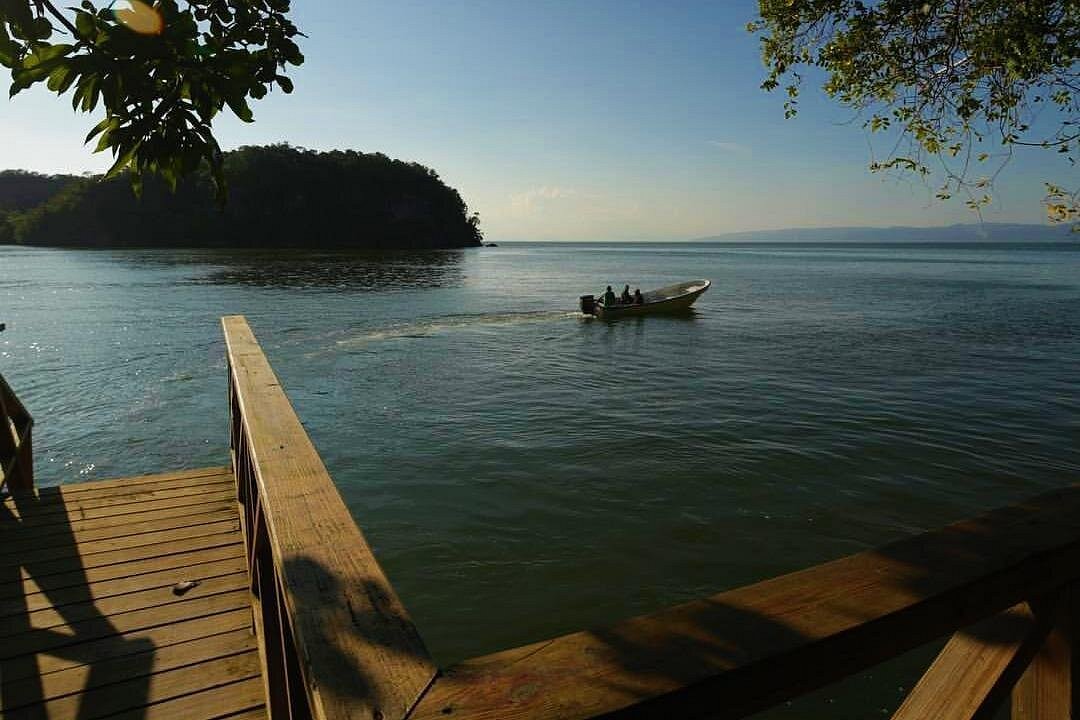
At the western end of Samaná Bay, the Yuna and Barracote rivers influence the surrounding coastal landscape. River water carries freshwater, sediment and organic material toward the bay.
Mangrove forests near river mouths grow within the changing conditions created by freshwater flows and tidal water.
This connection is important because changes in one part of the system can affect another. Altered river flows, sediment movement, pollution or changes in coastal water conditions may influence mangrove habitat.
The park's mangroves therefore need to be understood as part of a connected landscape involving rivers, wetlands, tidal channels and marine waters.
9. Why Mangrove Biodiversity Matters Beyond the Trees
Mangrove conservation is not only about protecting a particular group of trees. A healthy forest supports many forms of life.
Its ecological value includes:
- Fish habitat: Roots and channels provide shelter and feeding areas for aquatic organisms.
- Crustacean habitat: Muddy ground and submerged structures support crabs and other invertebrates.
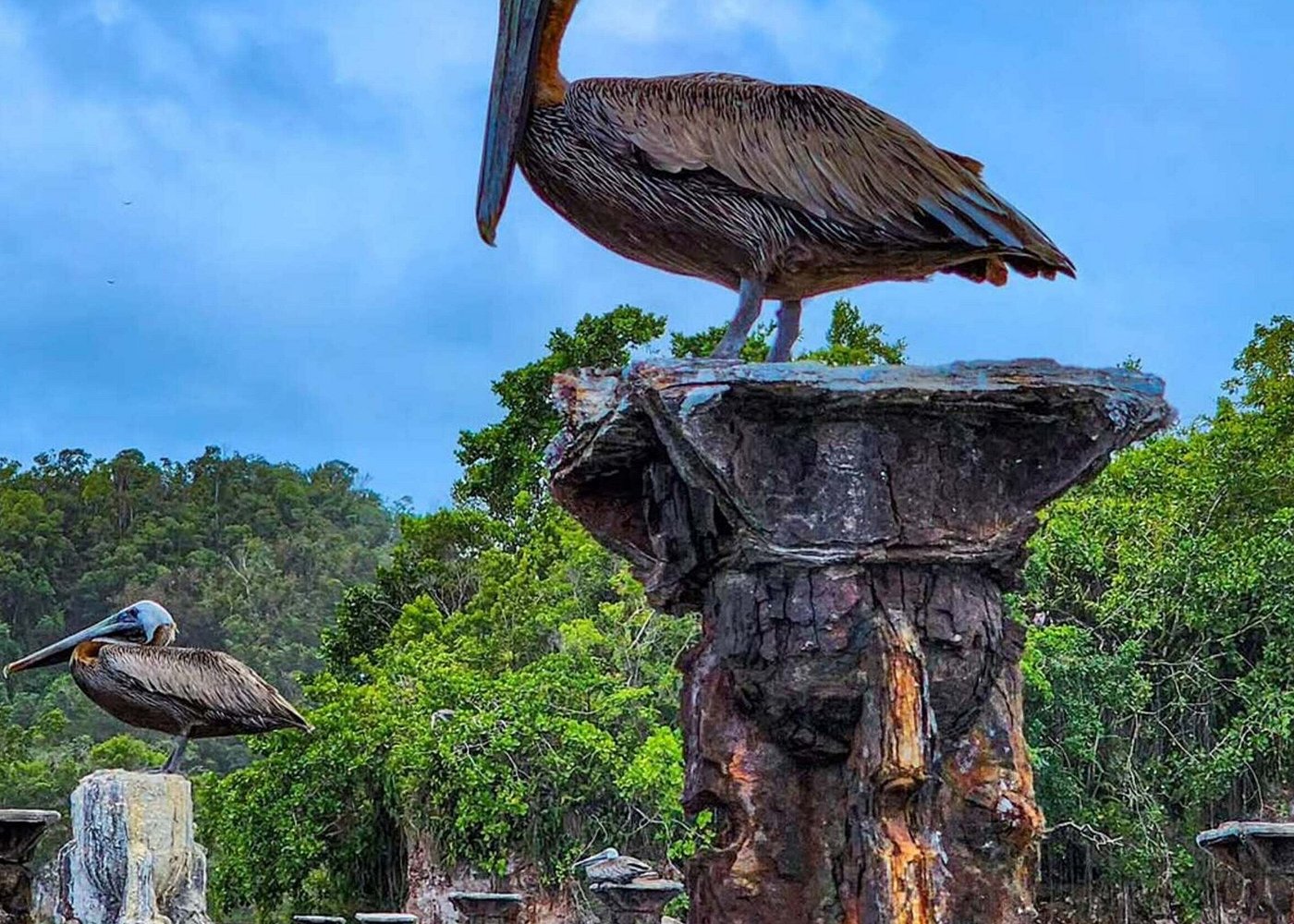
- Bird feeding areas: Fish, crabs and other small animals can provide food for birds that use coastal habitats.
- Organic matter production: Leaves and other plant material contribute to food webs.
- Sediment retention: Roots can slow water and help particles settle.
- Shoreline stability: Root systems help hold some coastal sediments in place.
- Carbon storage: Mangrove vegetation and waterlogged soils can store carbon over long periods.
These functions are connected. For example, protecting mangrove trees also helps maintain the root structures that provide aquatic shelter and influence sediment movement.
10. Threats That Can Affect the Mangrove Ecosystem
Mangrove forests are adapted to changing coastal conditions, but they can still be damaged by human activities and environmental pressures.
Removal of mangrove trees
Cutting trees can reduce forest cover and remove root structures that support the habitat. Large gaps may change water movement, sediment conditions and the ability of the forest to regenerate.
Pollution and waste
Plastic, untreated wastewater, oil and other pollutants can enter coastal channels. Depending on the type and amount, pollution may affect water quality, sediment and organisms living in the mangroves.
Changes in freshwater and sediment flows
Mangrove ecosystems depend on local water conditions. Changes to river flow, drainage or sediment supply can alter salinity, flooding and the distribution of suitable habitat.
Coastal development
Construction and land conversion can fragment mangrove areas or interfere with the natural movement of water.
Climate-related pressures
Rising sea levels, changing rainfall patterns and stronger coastal disturbances can create additional challenges. Mangrove forests may adjust or regenerate under some conditions, but their ability to persist depends on whether suitable space and environmental conditions remain available.
11. Mangrove Regeneration and Natural Forest Recovery
Mangrove forests can regenerate through the establishment of new plants, but recovery depends on more than simply planting seedlings.
Seeds or propagules must reach suitable locations, settle, survive and grow. The sediment must be appropriate, water movement must allow establishment, and the young plants must tolerate local salinity and flooding conditions.
A long-term ecological study in a mangrove forest inside Los Haitises examined small-scale disturbance and regeneration. It documented how forest structure and regeneration patterns can vary across the site.
This is important because a damaged mangrove area does not necessarily recover in the same way everywhere. Local conditions and the type of disturbance influence the outcome.
Successful conservation should therefore protect natural water movement, existing forest structure and the conditions that allow mangroves to regenerate.
12. How Visitors Can Explore Mangrove Habitats Responsibly
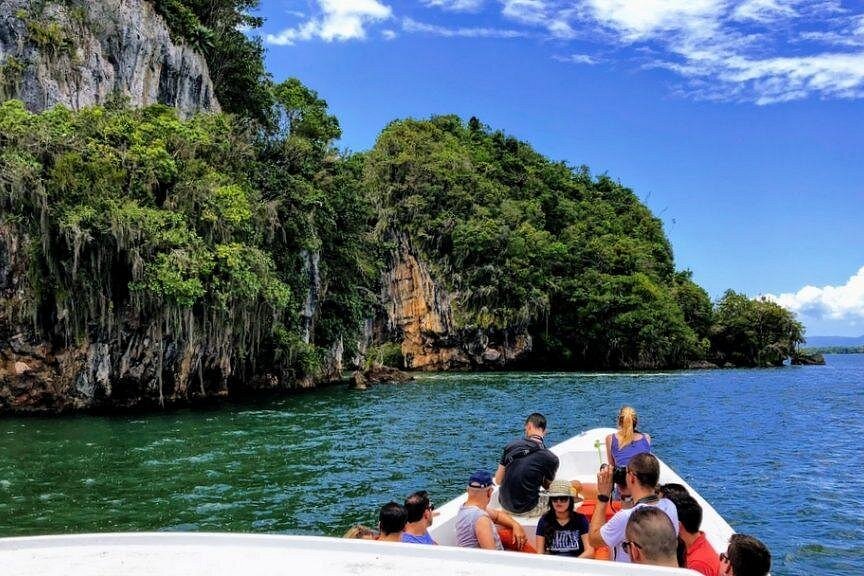
Visitors can experience the mangroves of Los Haitises through authorized nature excursions, including boat trips and other permitted activities where available.
A visit can offer opportunities to observe the shape of the roots, the narrow channels between trees and the relationship between mangrove forests and coastal water.
Responsible visitor behavior is essential.
- Follow the instructions of authorized guides and park personnel.
- Use permitted routes and landing areas.
- Do not cut, break or climb on mangrove roots.
- Avoid throwing food, plastic or other waste into the water.
- Do not disturb crabs, fish, birds or other wildlife.
- Keep noise low when passing through sensitive habitats.
- Do not remove plants, shells, animals or other natural objects.
- Avoid touching or damaging young mangrove plants.
Visitors should confirm which routes and activities are currently permitted before making travel arrangements. Access conditions and operating arrangements can change.
13. Why Protecting the Mangroves of Los Haitises Matters
The mangrove forests of Los Haitises are important because they connect several ecological processes in one place.
Their roots provide physical habitat. Their leaves contribute organic material. Their vegetation influences sediment and water movement. Their channels support aquatic organisms, while the wider forest contributes to coastal biodiversity and natural shoreline functions.
Damage to mangroves can therefore affect more than the trees themselves. It can also reduce the habitat available to fish and invertebrates and change the way water and sediment move through coastal areas.
Protecting these forests means protecting an interconnected ecosystem that supports the natural character of Los Haitises National Park.
Frequently Asked Questions
1. What type of mangrove is most prominent in Los Haitises?
Red mangrove (Rhizophora mangle) was dominant in a scientific study of the forest at the western end of Samaná Bay near the Yuna and Barracote river mouths. Other areas of the park may have different species compositions.
2. Which mangrove species are found in Los Haitises?
Park and scientific references identify red mangrove, white mangrove and black mangrove. The park management plan also records buttonwood in parts of the park's mangrove communities.
3. Why are mangrove roots important for fish?
Mangrove roots create sheltered spaces and surfaces where small organisms can live. These areas can provide feeding opportunities and protection for juvenile and small fish.
4. Do mangroves provide food for marine animals?
Yes. Fallen leaves and other plant material contribute to organic matter in the ecosystem. Microorganisms and small invertebrates help break down this material, supporting parts of the coastal food web.
5. Do mangroves protect the coast from erosion?
Mangrove roots can help stabilize soft sediment, while trunks and roots can reduce water and wave energy in some settings. The amount of protection depends on local conditions.
6. Are mangroves important for birds in Los Haitises?
Yes. Mangrove forests and nearby coastal habitats can provide feeding areas and shelter for birds. Fish, crabs and other aquatic organisms may be food sources for coastal and wading birds.
7. Can visitors see mangroves during a Los Haitises boat tour?
Mangrove channels and coastal forests are among the natural features experienced on some authorized boat excursions. The exact route depends on the tour and current access conditions.
8. How can visitors help protect the mangroves?
Visitors can follow authorized routes, avoid damaging roots and plants, keep waste out of the water, maintain a respectful distance from wildlife and follow guide instructions.
Conclusion
The mangrove ecosystem of Los Haitises National Park is much more than a collection of coastal trees. It is a living system where roots create aquatic shelter, fallen leaves contribute to food cycles, and vegetation helps influence sediment movement and shoreline stability.
The forests also connect the park's rivers, wetlands and coastal waters. This relationship makes mangroves an important part of the park's ecological identity.
For visitors, exploring these forests offers a closer look at how tropical coastal ecosystems function. For conservation, protecting them means maintaining the habitats and natural processes that support the wider biodiversity of Los Haitises.
Local explorer & expert guide in Samana Whale Watching Tour.