The Epiphytes of Los Haitises National Park: Orchids, Bromeliads, Mosses and Life on Trees
Look closely at the trunks and branches of trees in a humid tropical forest and you may notice plants growing above the ground without being rooted in the soil. These plants are called epiphytes. They use other plants, usually trees, as physical support while obtaining water and nutrients from their surroundings.
Epiphytes are an interesting part of tropical forest biodiversity. They can include orchids, bromeliads, ferns, mosses and liverworts. Some grow on tree trunks, others attach themselves to branches, and certain species can also grow on rocks.
Los Haitises National Park provides an especially interesting setting for understanding these organisms. Its humid forest environments support a variety of plant communities, and the park's management plan identifies several bromeliads among its frequent epiphytes.
This guide explains what epiphytes are, how they survive above the ground, why bromeliads and orchids are important, and how these plants contribute to the ecological richness of Los Haitises.
1. What Are Epiphytes?
Epiphytes are plants that grow on another plant for physical support without taking nutrients directly from the host plant.
The supporting tree is known as a host tree or phorophyte.
Unlike parasitic plants, true epiphytes do not normally obtain their food by extracting nutrients from the tree's living tissues.
Instead, they obtain water and nutrients from sources such as:
- Rainwater.
- Moisture in the surrounding air.
- Dust and mineral particles.
- Decomposing leaves and organic material.
- Nutrients collected in small spaces around their roots.
Epiphytes can grow on tree trunks, branches and other elevated surfaces.
Some species also grow on rocks. These are sometimes described as epilithic plants.
Epiphytes are especially common in humid tropical forests, where suitable moisture conditions allow many species to survive above the forest floor.
2. Why Epiphytes Matter in Los Haitises
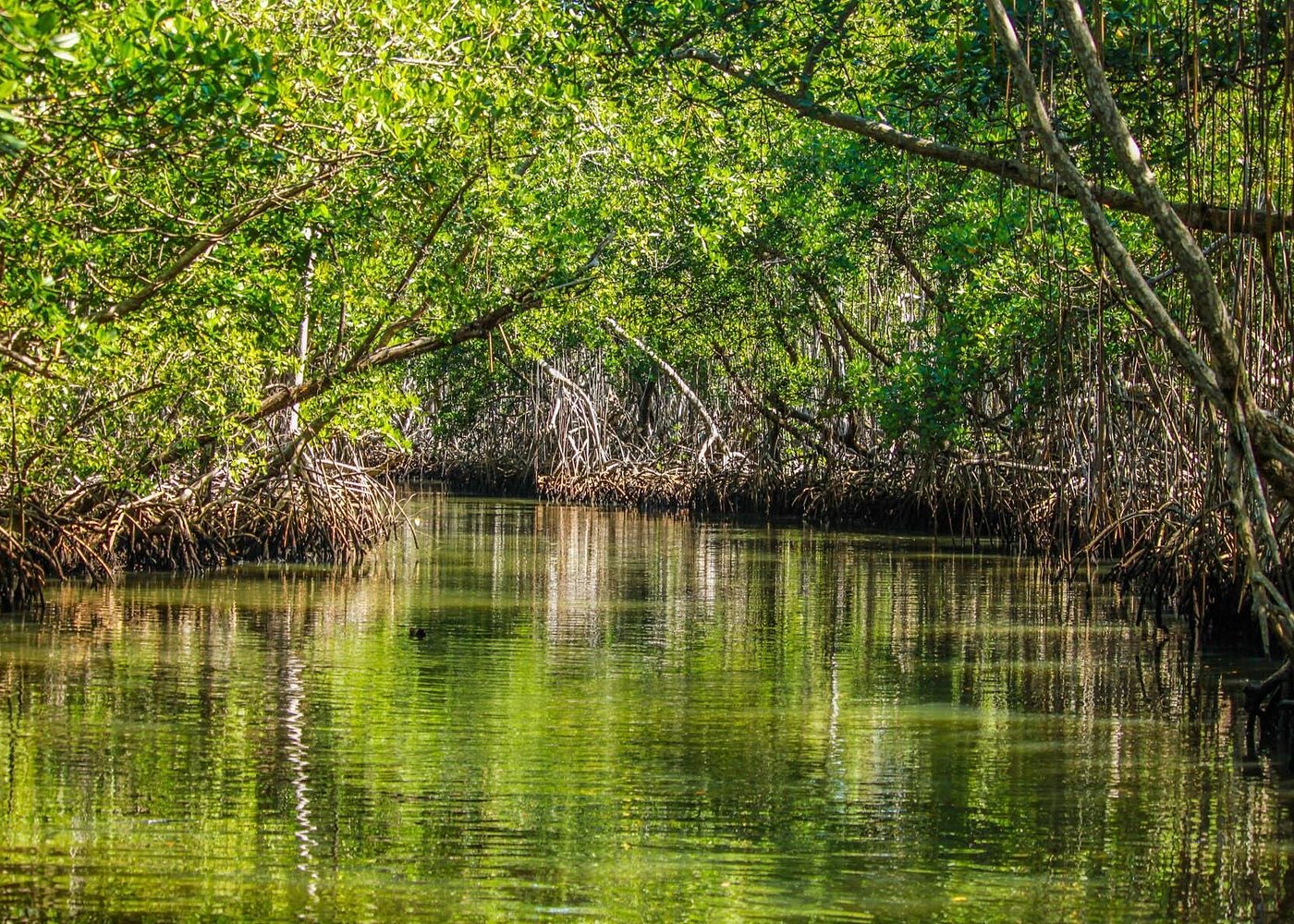
Los Haitises contains humid tropical forest, limestone formations, wetlands and coastal vegetation.
The park's management plan for 2012–2017 identifies bromeliads as particularly frequent epiphytes in parts of its vegetation.
It lists several species from the bromeliad family, including Catopsis, Tillandsia, Vriesea and Guzmania.
The same document notes that some of these plants grow attached to rocks along cliffs and steep coastal formations.
This is an important feature of the park's plant diversity: epiphytes are not limited to tree branches. Suitable rock surfaces can also provide places for certain species to establish themselves.
These plants contribute to forest biodiversity by adding different forms of vegetation to trunks, branches and rocky surfaces.
3. Bromeliads: Important Epiphytes of Los Haitises
Bromeliads belong to the botanical family Bromeliaceae.
They are well known for their varied leaf shapes and growth forms.
Some bromeliads grow in soil, while others attach themselves to trees or rocks.
The Los Haitises management plan identifies several bromeliad species among the park's frequent epiphytes.
Examples listed in that document include:
- Catopsis berteroana
- Catopsis sessiliflora
- Tillandsia fasciculata
- Tillandsia usneoides
- Tillandsia utriculata
- Tillandsia capitata
- Tillandsia festucoides
- Tillandsia pruinosa
- Vriesea ringens
- Vriesea sanguinolenta
- Guzmania berteroana
- Guzmania lingulata
These names are drawn from the historical park management document. They should be checked against current botanical taxonomy and updated field records before being used as a complete modern species inventory.
Bromeliads are interesting because different species have different ways of collecting water and adapting to life above the ground.
4. How Epiphytic Bromeliads Collect Water
Many epiphytic bromeliads have leaf arrangements that help collect water.
In some species, the leaves form a central cup or tank where rainwater can accumulate.
This water may provide moisture for the plant and create a small habitat for other organisms.
Other bromeliads, especially some species of Tillandsia, have different water-absorbing structures on their leaves.
These structures are called trichomes.
Trichomes can help certain bromeliads absorb water and dissolved nutrients from their surroundings.
The exact adaptations vary among species.
Not every bromeliad forms a water-holding tank, and not every species obtains moisture in the same way.
These differences allow bromeliads to occupy a range of environments, including branches, trunks and exposed rocky surfaces.
5. Orchids: Another Important Group of Tropical Epiphytes
Orchids belong to the family Orchidaceae.
They are among the best-known groups of flowering plants and include many species adapted to life on trees.
Epiphytic orchids use their roots to attach themselves to bark and other surfaces.
Their roots are often different from the roots of ordinary soil-growing plants.
Many epiphytic orchids have an outer root covering called velamen.
This spongy tissue can absorb and temporarily hold water, helping the plant manage changing moisture availability.
Orchid roots also help the plant remain attached to its supporting surface.
Although orchids are an important group of tropical epiphytes in Hispaniola, a complete current inventory of epiphytic orchid species specifically within Los Haitises should be verified through botanical records.
Visitors should therefore avoid assuming that every orchid species recorded elsewhere in the Dominican Republic also occurs inside the park.
6. Ferns Growing Above the Ground
Ferns are another group that can include epiphytic species.
Some ferns grow directly in soil, while others establish themselves on tree trunks and branches.
Their spores allow them to reproduce without producing flowers or seeds.
When suitable moisture and surface conditions are available, spores can develop into new fern plants.
Epiphytic ferns may use bark crevices and accumulated organic material as places to establish their roots.
Some species grow in exposed conditions, while others are more closely associated with shaded and humid environments.
The presence of ferns on trees adds another layer of plant diversity to tropical forests.
7. Mosses and Liverworts on Tree Trunks
Mosses and liverworts belong to a group of small, non-vascular plants known as bryophytes.
They do not have the same water-conducting structures as flowering plants and trees.
Many bryophytes absorb water across their surfaces and are strongly influenced by environmental moisture.
In humid forests, they may form green or dark patches on tree trunks, branches, rocks and damp surfaces.
They can become especially noticeable where humidity remains high and direct sunlight is limited.
Mosses and liverworts are not flowering plants, but they contribute to the structure and biological diversity of forest surfaces.
Their presence can also make tree trunks look as though they are covered with a soft natural layer.
8. Lichens: Organisms Living on Trees and Rocks
Lichens are often seen growing on tree bark, branches and exposed rocks.
A lichen is a partnership involving a fungus and a photosynthetic partner, usually an alga or cyanobacterium.
The fungal partner provides much of the physical structure, while the photosynthetic partner produces energy using sunlight.
Lichens are not true plants, but they are an important part of many forest communities.
They can survive in a range of environments, from humid forest interiors to exposed surfaces.
Some lichens are sensitive to environmental conditions, so scientists may study their presence and diversity when investigating ecosystems.
They also add another visible layer of life to tree trunks and rocks.
9. How Epiphytes Attach Themselves to Trees
Epiphytes need a stable surface where their roots or other attachment structures can remain in place.
Different groups use different methods.
Orchids: Many epiphytic orchids use specialized roots that attach to bark and absorb moisture.
Bromeliads: Their roots often provide physical attachment, while their leaves may play an important role in collecting water.
Epiphytic ferns: Their roots can attach to bark and grow through accumulated organic material.
Mosses and liverworts: These small plants attach to surfaces using structures suited to their growth form.
Lichens: Their fungal structures attach to the surface of trees or rocks.
The supporting tree is not normally a source of food for a true epiphyte. It mainly provides a place to grow.
10. How Epiphytes Survive Without Growing in Soil
Living above the ground creates challenges.
Epiphytes cannot always access water and nutrients as easily as plants rooted in soil.
They have therefore developed different adaptations.
Water collection
Some species collect rainwater in leaf structures.
Others absorb moisture through specialized leaves or roots.
Nutrient collection
Dust, organic particles, animal remains and decomposing plant material can provide nutrients.
Water storage
Certain plants have structures that help them retain water during periods when rainfall is limited.
Attachment
Roots and other structures help keep plants attached to branches, trunks or rocks.
Growth in small spaces
Some epiphytes establish themselves in bark cracks where moisture and organic matter can accumulate.
These adaptations allow plants to use elevated surfaces that might otherwise remain available only to climbing vines and other organisms.
11. The Relationship Between Epiphytes and Their Host Trees
Epiphytes use trees as physical support, but the relationship is generally not parasitic.
A tree provides a place where an epiphyte can receive sunlight and rainfall.
The epiphyte, in return, may add vegetation structure to the tree's surface.
Some epiphyte communities can create small habitats for insects and other organisms.
However, very heavy growth of certain plants may add weight to branches, and dense accumulations of organic material can influence the conditions on the supporting surface.
The ecological relationship varies according to plant species and local conditions.
It is important not to assume that all epiphytes benefit their host trees directly or that they are always completely without effects.
12. Epiphytes and Small Forest Habitats
Epiphytes can create small habitats within larger forest environments.
Water collected by some bromeliads may support small aquatic communities.
Moist spaces between leaves can provide shelter for tiny invertebrates.
Organic material caught among roots and branches can create places where microorganisms and small animals live.
Mosses and liverworts can retain moisture on surfaces.
Lichens and other epiphytes provide additional biological structure.
These small habitats contribute to the complexity of tropical forests.
A single mature tree may support several types of organisms on its trunk and branches.
13. Why Humidity Is Important for Epiphytes
Humidity is an important environmental factor for many epiphytes.
Plants growing above the soil may be exposed to changing moisture conditions.
Some species absorb water from rainfall and surface moisture, while others depend more strongly on humid air and regular wetting.
The humid forest environments of Los Haitises provide conditions suitable for several types of epiphytic vegetation.
However, humidity is not identical throughout the park.
Sun exposure, elevation, wind, tree cover and proximity to water can influence local moisture conditions.
A shaded branch inside a humid forest may provide a different environment from a sun-exposed tree along an open coastal edge.
This variation helps explain why epiphyte communities can differ between habitats.
14. Epiphytes on Limestone Cliffs and Rocks
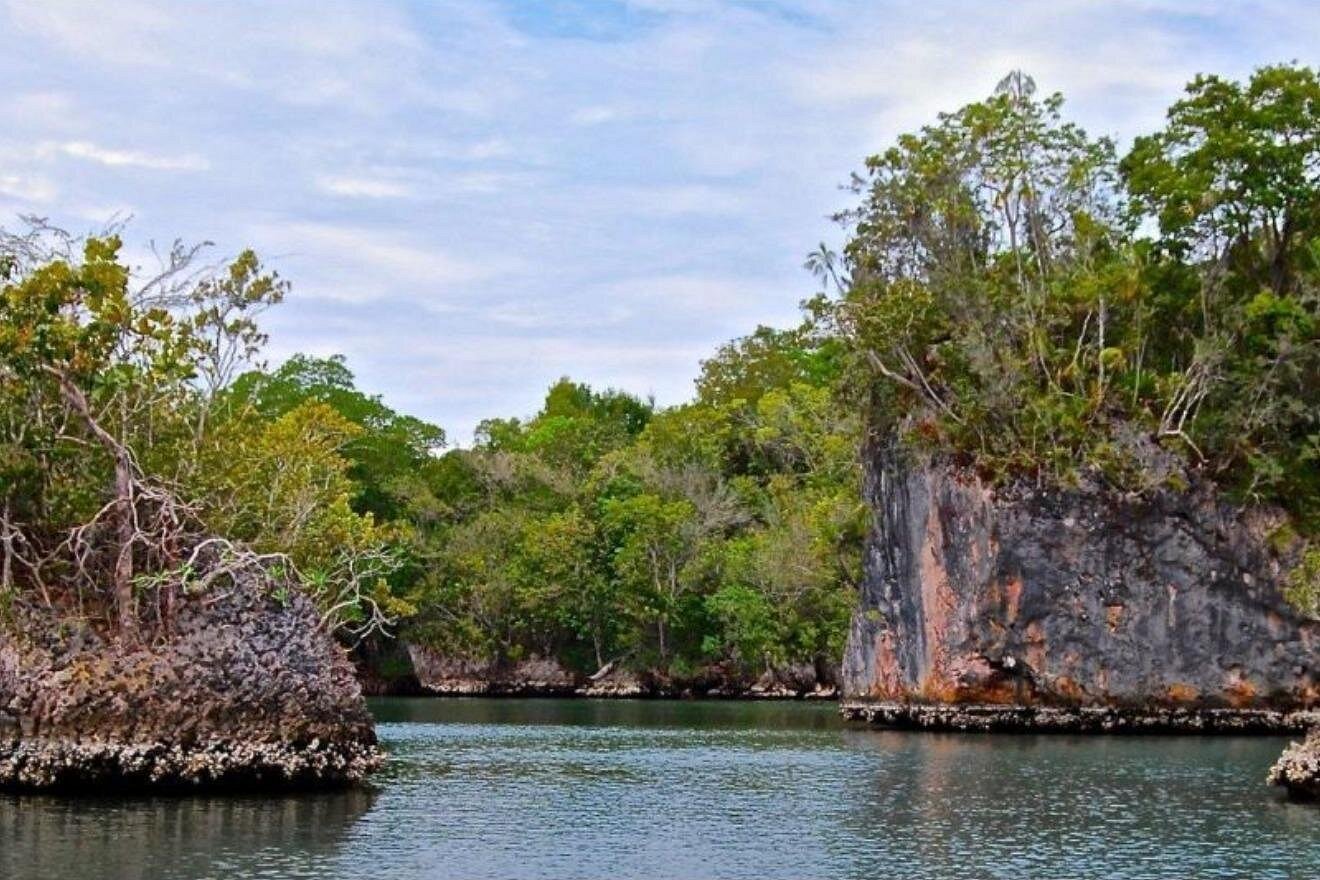
One particularly interesting feature of Los Haitises is its limestone landscape.
The park contains cliffs, rocky formations and coastal limestone surfaces.
The management plan records several bromeliads growing attached to rocks along cliffs and steep formations.
This demonstrates that some plants commonly associated with trees can also establish themselves on non-tree surfaces.
Rock-dwelling plants face different challenges from those growing on branches.
They may experience stronger sunlight, wind exposure and limited access to accumulated organic material.
Their ability to survive depends on their specific adaptations and local moisture conditions.
The presence of vegetation on limestone surfaces adds to the ecological diversity of the park's karst landscape.
15. Threats to Epiphytes and Their Habitats
Epiphytes depend on suitable supporting surfaces and environmental conditions.
Damage to forests can therefore affect them even when they are not directly targeted.
Potential pressures include:
Removal of host trees: Cutting trees eliminates the surfaces where many epiphytes grow.
Forest fragmentation: Breaking continuous forest into smaller areas can change light, wind and humidity conditions.
Uncontrolled fires: Fires can damage tree bark, branches and epiphytic plants.
Pollution: Contaminants may affect plants and the habitats where they grow.
Unnecessary collection: Removing orchids, bromeliads and other plants from the wild can reduce local populations.
Unmanaged tourism: Repeated disturbance or damage to vegetation can affect sensitive plant communities.
Protecting epiphytes requires conserving the wider forest structure and preventing unnecessary disturbance.
16. How Epiphytes Can Be Conserved in Los Haitises
Conservation of epiphytes begins with protecting the trees and natural surfaces that support them.
Important measures include:
- Protecting mature native trees.
- Preventing unauthorized plant collection.
- Maintaining humid forest habitats.
- Reducing the risk of uncontrolled fires.
- Monitoring epiphyte diversity through botanical surveys.
- Protecting limestone cliffs and natural rocky habitats.
- Avoiding unnecessary disturbance during tourism activities.
Scientific inventories are particularly useful because they can document species distribution and changes in plant communities.
Park-specific research can also help distinguish species that are confirmed in Los Haitises from those recorded elsewhere in the Dominican Republic.
17. How Visitors Can Observe Epiphytes Responsibly
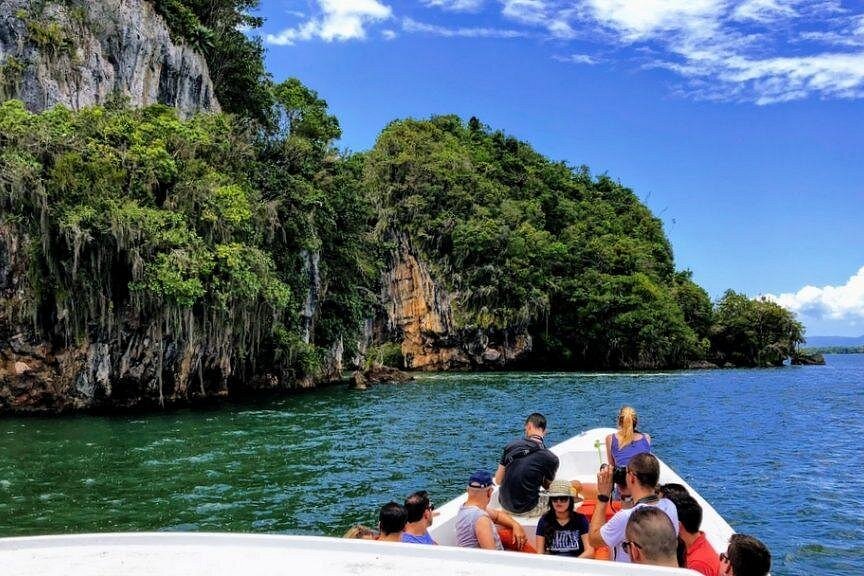
Visitors may notice plants growing on trees and rocks while exploring authorized areas of Los Haitises.
They may see bromeliads attached to branches, green patches of moss on damp surfaces or other plants growing above the forest floor.
To protect these organisms:
- Observe plants without removing them.
- Do not pull orchids or bromeliads from trees.
- Avoid scratching or damaging bark.
- Do not climb trees to photograph plants.
- Avoid stepping on sensitive vegetation.
- Follow authorized routes and guide instructions.
A camera or binoculars can help visitors observe plants growing high above the ground without disturbing them.
The most responsible way to appreciate epiphytes is to leave them exactly where they are growing.
Frequently Asked Questions
1. What are epiphytes?
Epiphytes are plants that grow on other plants for physical support without taking nutrients directly from their host.
2. Are epiphytes found in Los Haitises National Park?
Yes. The park's 2012–2017 management plan identifies several bromeliads among its frequent epiphytes.
3. Which bromeliads are recorded in the Los Haitises management plan?
The plan lists species from the genera Catopsis, Tillandsia, Vriesea and Guzmania, among others.
4. Are orchids epiphytes?
Many tropical orchids grow as epiphytes, although other orchid species grow on the ground or in different habitats.
5. Do epiphytes harm trees?
Most true epiphytes use trees mainly for physical support rather than extracting food from them. The effects of dense growth can vary.
6. How do bromeliads collect water?
Some bromeliads collect rainwater in structures formed by their leaves, while others absorb moisture through specialized leaf surfaces.
7. What is the difference between mosses and lichens?
Mosses are small non-vascular plants. Lichens are partnerships involving fungi and photosynthetic organisms.
8. Can epiphytes grow on rocks?
Yes. Some species can establish themselves on limestone and other rock surfaces where suitable conditions exist.
9. Why are epiphytes important for biodiversity?
They add plant diversity and create small habitats that can support insects, microorganisms and other organisms.
10. Can visitors collect epiphytes in Los Haitises?
Visitors should not collect or remove plants from the park. They should observe epiphytes in their natural habitats and follow park regulations.
Conclusion
Epiphytes are a fascinating part of the natural vegetation of Los Haitises National Park.
Bromeliads, orchids, ferns, mosses and lichens use tree trunks, branches and rocky surfaces as places to grow. Their adaptations allow them to obtain moisture and nutrients without depending directly on soil.
The park's documented bromeliad diversity demonstrates the importance of these plants within its natural habitats.
Protecting epiphytes means protecting the trees, limestone surfaces and humid environmental conditions that allow them to survive.
For visitors, looking beyond the forest floor reveals another layer of biodiversity in Los Haitises: the remarkable plant life growing above the ground.
Local explorer & expert guide in Samana Whale Watching Tour.