The Freshwater Swamps of Los Haitises National Park: Vegetation, Wildlife and Groundwater Connections
Los Haitises National Park is widely recognized for its limestone hills, mangrove forests, caves and winding coastal waterways. However, its natural environment also includes less familiar freshwater wetland habitats that are important to the park's ecological balance.
Freshwater swamps are water-influenced environments where saturated soils and water-loving vegetation create distinctive habitats. Unlike coastal mangroves, which are influenced by tides and saline or brackish water, freshwater swamps are generally associated with inland water conditions.
In Los Haitises, understanding these environments requires looking beneath the surface. The park's limestone geology allows rainfall to enter underground passages and interact with groundwater. This creates connections between surface wetlands, springs, rivers and the wider karst water system.
This guide explores the characteristics of freshwater swamps, their vegetation, their relationship with groundwater and their ecological importance within Los Haitises National Park.
1. Understanding Freshwater Swamps
A freshwater swamp is a type of wetland characterized by waterlogged soil and substantial woody vegetation, such as trees and shrubs adapted to wet conditions.
Water may remain present throughout much of the year or fluctuate according to rainfall, groundwater levels and local drainage.
Freshwater swamps are different from freshwater marshes. Marshes are generally dominated by non-woody vegetation, such as grasses, sedges and other aquatic plants. Swamps usually contain more trees and shrubs.
However, these categories can overlap. A wetland may contain shallow open water, grasses, shrubs and trees in different areas.
In tropical environments, freshwater swamps can occur in low-lying depressions, along watercourses and in places where groundwater reaches the surface.
The distinction matters in Los Haitises because its wetland landscape contains several different habitat types. Freshwater swamp environments should not be confused with the park's coastal mangrove forests.
2. Where Do Freshwater Wetlands Fit into the Los Haitises Landscape?
Los Haitises is a protected landscape with a mixture of limestone formations, valleys, depressions, forests, mangroves and wetlands.
The park's 2012–2017 management plan describes this natural mosaic and explains that the central areas include humid broadleaf forest growing on different types of terrain. Some forest also develops on karstic substrates where soil accumulates in lower areas and depressions.
The same management document describes the park's extensive wetland and groundwater environment.
These details help explain why water-influenced habitats can occur alongside forested limestone hills.
However, the available descriptions do not provide a current, detailed map identifying every freshwater swamp within the park boundary. It is therefore more accurate to discuss freshwater swamp environments as part of the park's wider hydrological and wetland landscape rather than invent the names or locations of individual swamps.
3. How Limestone Geology Supports Freshwater Wetlands
The geology of Los Haitises is one of the main reasons its water system is so distinctive.
The park is characterized by tropical karst terrain formed largely from limestone. Over long periods, water dissolves parts of the rock, creating openings, fractures, depressions and underground passages.
Rainwater can enter these openings and travel below the surface.
Some groundwater may eventually emerge through springs or contribute to surface-water systems. Other water remains underground and moves through the karst aquifer.
This creates an important connection between the visible landscape and the hidden water system.
A freshwater wetland in this environment may receive water from rainfall, groundwater discharge, local runoff or a combination of these sources.
The exact balance varies between locations. Not every wetland has the same underground connection, and the presence of water in one depression does not prove that it is supplied by a particular spring or underground channel.
4. Groundwater Connections in Los Haitises
One of the most important scientific studies of the park's water environment is the 2013 research paper Humedales en Los Haitises, República Dominicana.
The researchers describe numerous wetlands in the Los Haitises karst environment that are connected to groundwater.
Their investigation included:
- Reviewing existing hydrogeological information.
- Measuring water levels in rivers, springs and wells.
- Collecting water samples.
- Examining chemical and isotopic characteristics.
- Consulting people involved in local water management.
The study found similarities in the chemical composition of the water bodies examined. It also identified isotopic differences between spring water and some rivers and shallow dug wells, with evidence suggesting evaporation in the latter.
These findings demonstrate that the park's wetlands are part of a wider hydrological system.
For freshwater swamp environments, this relationship is significant because groundwater can help maintain wet soil conditions even when direct surface-water inflow is limited.
It also means that protecting wetlands requires attention to the water system beneath the land, not only the vegetation visible above it.
5. Vegetation in Freshwater Swamp Environments
Vegetation is one of the main features that distinguishes a swamp from other wetland types.
Plants growing in freshwater swamps must tolerate conditions that may include saturated soil, periodic flooding and limited oxygen around their roots.
Depending on the location, freshwater swamp vegetation can include:
Water-tolerant trees: Trees adapted to wet soil may form the main upper vegetation layer.
Shrubs: Smaller woody plants can grow around the edges or beneath taller vegetation.
Herbaceous plants: Ferns, grasses and other moisture-loving plants may occupy open spaces and wetter ground.
Mosses and other small plants: These may grow in shaded, humid conditions where the local environment is suitable.
The park's management plan describes humid broadleaf forest and notes that ferns, mosses and lichens occur in shaded forest understory conditions. It also identifies vegetation growing in karst depressions where soil accumulates.
These observations help explain the variety of plant environments in the park, although they should not be interpreted as a verified species list for every freshwater swamp.
Why swamp vegetation matters
Wetland plants help stabilize saturated soils, provide shelter for animals and contribute organic material to the ecosystem.
Leaves, branches and other plant material gradually decompose, forming part of the wetland's nutrient cycle.
The structure of the vegetation also creates different habitats. Dense shrubs, tree trunks, roots and open water can support different organisms within the same wetland.
6. Freshwater Swamps and Mangrove Forests: Important Differences
Freshwater swamps and mangrove forests are both wetland environments, but they are not the same ecosystem.
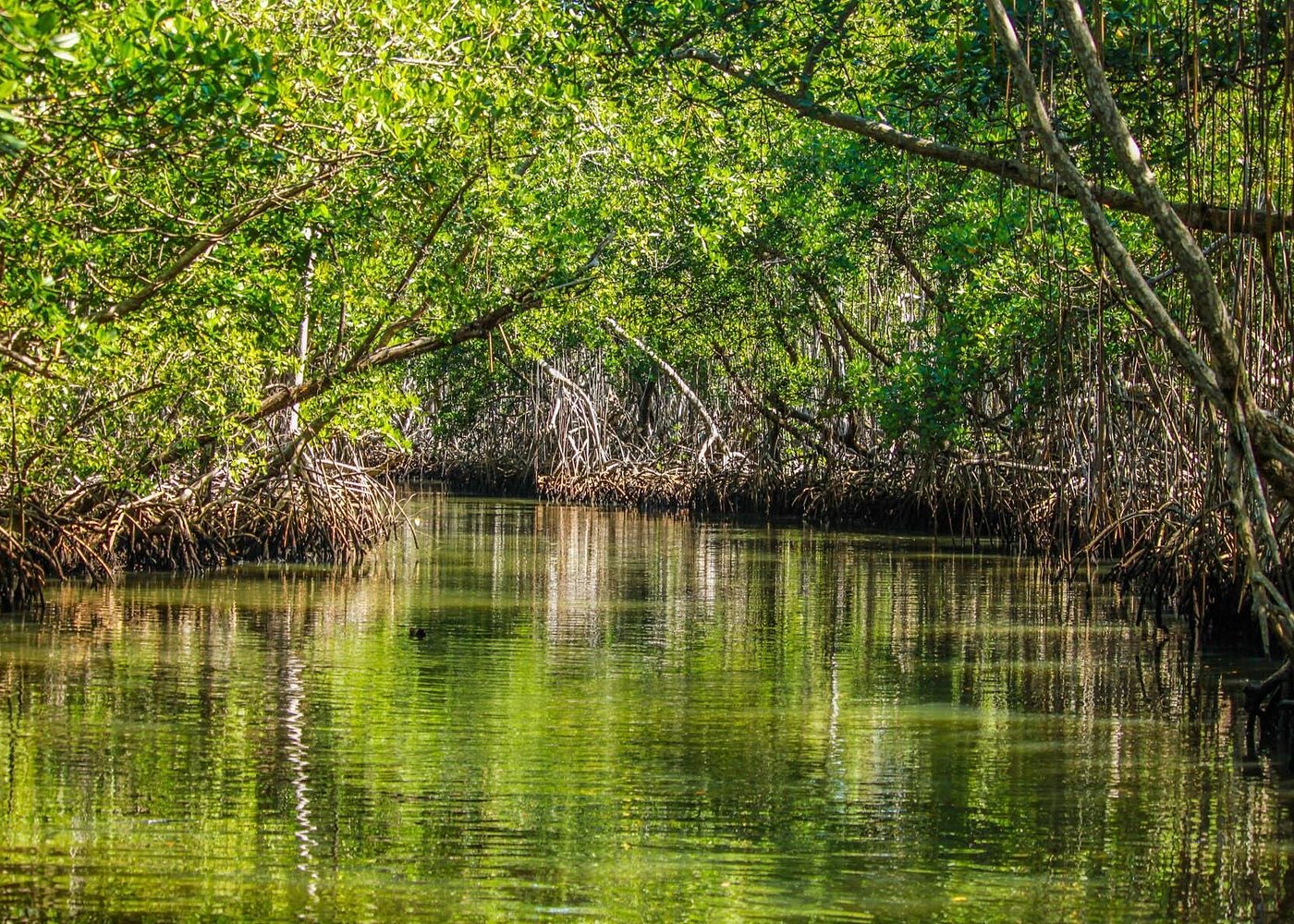
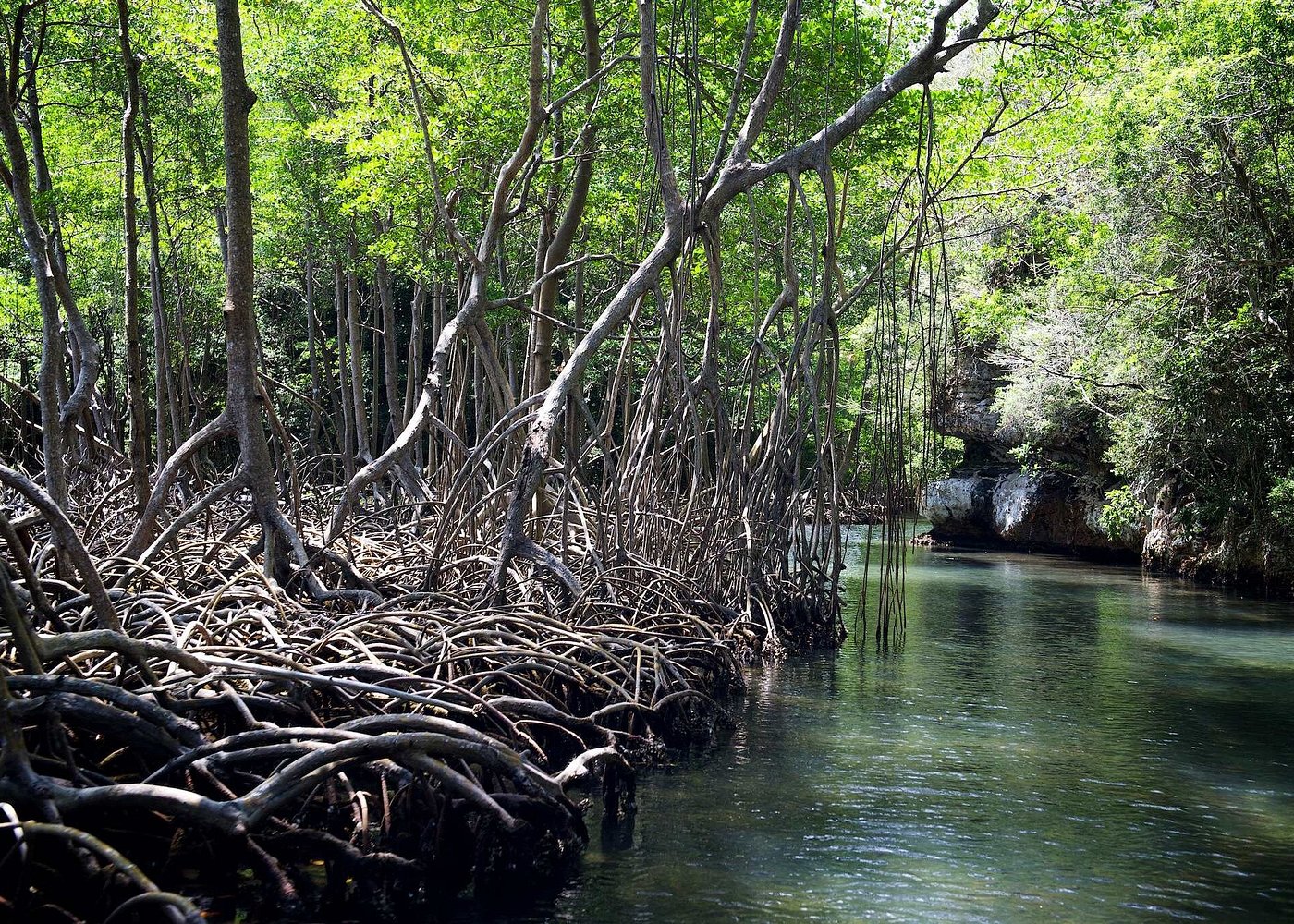
Mangroves are specialized coastal trees and shrubs adapted to saline or brackish water and tidal flooding.
Freshwater swamps are generally inland or associated with freshwater drainage and groundwater.
The differences include:
FeatureFreshwater swampMangrove forestMain water influenceFreshwater and groundwaterTides and coastal waterSalinityGenerally lowOften brackish or salineTypical vegetationWater-tolerant trees and shrubsSalt-tolerant mangrove speciesLocationInland depressions and freshwater areasCoastal and estuarine environmentsFloodingRainfall, drainage and groundwaterTidal movement and freshwater input
These categories can exist near one another in a large protected landscape.
Los Haitises contains both inland water-influenced habitats and coastal mangrove ecosystems. Understanding their differences helps visitors appreciate the park's ecological variety.
7. Wildlife Associated with Freshwater Swamps
Freshwater swamps can support a range of wildlife because they combine water, vegetation, food resources and sheltered areas.
The species found in a particular swamp depend on its water depth, vegetation, seasonal conditions and connection with nearby habitats.
Birds
Wetland birds may use shallow water and saturated ground to search for food.
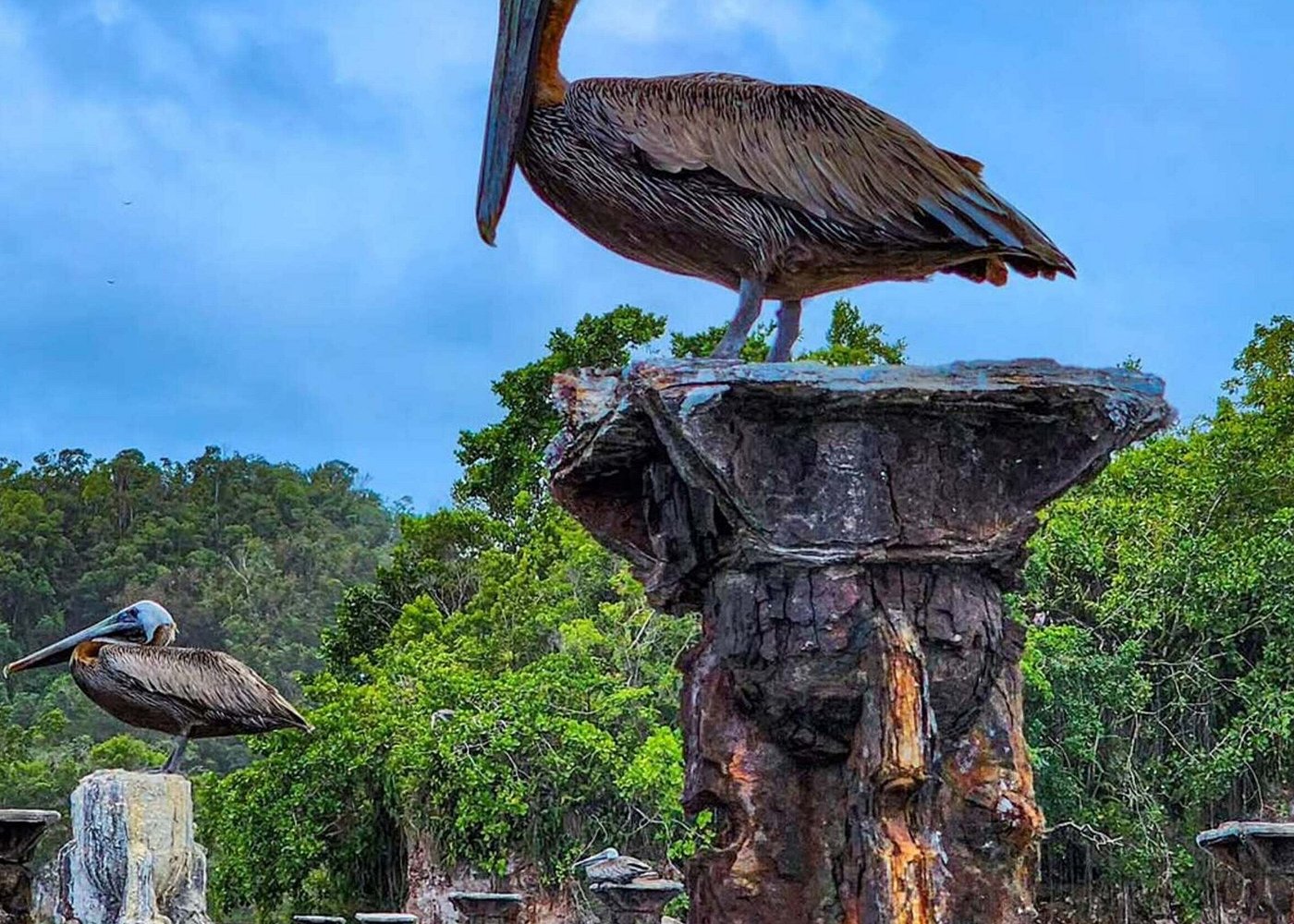
Herons and egrets are examples of birds associated with wetland environments. They can feed in shallow water where fish and other aquatic organisms are available.
Other birds may use swamp vegetation for resting or shelter.
Aquatic organisms
Freshwater habitats can support fish and smaller aquatic organisms. Their presence depends on the water body's connectivity and environmental conditions.
Invertebrates
Insects and other invertebrates are important components of freshwater food webs. They may live in the water, on wet vegetation or in the surrounding soil.
Amphibians and reptiles
Some amphibians and reptiles are adapted to wet environments. Their presence depends on suitable local habitat conditions.
It is important not to assume that every species associated with Dominican wetlands occurs in every swamp inside Los Haitises. Reliable site-specific surveys are needed to confirm individual species.
8. How Rainfall Influences Freshwater Swamps
Rainfall is a major source of freshwater in tropical wetland environments.
When rain falls over the park, some water runs across the surface while some enters the ground through openings in the limestone.
This can influence swamp conditions in several ways:
- Increasing the amount of surface water.
- Saturating soil around trees and shrubs.
- Replenishing shallow depressions.
- Contributing to groundwater recharge.
- Increasing runoff into connected low-lying areas.
The response depends on local geology and drainage.
Some swamp environments may respond quickly to heavy rainfall, while others may be influenced more strongly by slower groundwater movement.
As rainfall changes throughout the year, water levels and the extent of saturated ground may also change.
9. Why Waterlogged Soil Creates a Special Environment
Soil that remains saturated for long periods behaves differently from well-drained soil.
When water fills the spaces between soil particles, the amount of oxygen available to plant roots can become limited.
Many ordinary terrestrial plants struggle under these conditions. Wetland plants, however, have adaptations that help them survive.
Some species can tolerate low-oxygen soil, while others have specialized root structures or growth patterns suited to wet environments.
These conditions also influence the organisms living in the soil.
Microorganisms break down organic material and participate in nutrient cycling. The rate and type of decomposition can differ from those in well-drained forest soils.
As a result, freshwater swamps have their own ecological processes and should be considered important habitats rather than simply flooded areas.
10. The Role of Freshwater Swamps in the Wider Ecosystem
Freshwater swamps contribute to the ecological functioning of a protected landscape in several ways.
Supporting biodiversity
Different water depths and vegetation structures create habitats for plants, birds and aquatic organisms.
Holding water
Saturated soils and low-lying wetland areas can temporarily store water. The amount stored depends on the size, soil and hydrological conditions of each wetland.
Supporting nutrient cycling
Wetland plants and microorganisms process organic material and contribute to nutrient movement through the ecosystem.
Connecting habitats
Wetlands can link forest environments, rivers, groundwater systems and other water bodies.
Maintaining ecological diversity
The presence of different wetland types increases the variety of habitats within Los Haitises.
These functions are connected. Changes to water quality or drainage can affect vegetation and wildlife at the same time.
11. Environmental Threats to Freshwater Swamps
Freshwater wetlands can be sensitive to changes in their surrounding environment.
Potential pressures include:
- Pollution entering surface water or groundwater.
- Removal of wetland vegetation.
- Changes to natural drainage.
- Land clearing and soil disturbance.
- Uncontrolled fires in surrounding vegetation.
- Excessive disturbance of sensitive habitats.
The Los Haitises management plan identifies broader conservation pressures, including vegetation removal, fires, habitat degradation and pollution associated with human activities.
That document covers the park's management period from 2012 to 2017, so it should not be treated as a current condition assessment for every wetland.
The potential effects of environmental pressure depend on the location and the type of wetland.
For example, pollution entering a groundwater-connected wetland may be difficult to identify by looking only at the surface.
This is why water-quality monitoring and protection of the surrounding catchment are important.
12. How Freshwater Swamps Can Be Protected
Protecting freshwater swamps requires conserving both the wetland habitat and the natural processes that maintain it.
Important conservation actions include:
Protecting groundwater: Preventing pollutants from entering the karst system helps safeguard connected water bodies.
Maintaining vegetation: Native wetland and surrounding forest vegetation should be protected from unnecessary clearing.
Preventing waste disposal: Rubbish and wastewater should never be discharged into wetland areas.
Maintaining natural drainage: Unnecessary changes to watercourses and drainage patterns can alter wetland conditions.
Monitoring water levels: Long-term observations help researchers understand seasonal and long-term changes.
Managing visitor activity: Visitors should remain on authorized routes and avoid disturbing sensitive vegetation and wildlife.
Conservation is most effective when wetland protection is considered alongside the management of forests, rivers, springs and underground water.
13. Can Visitors Explore Freshwater Swamps in Los Haitises?
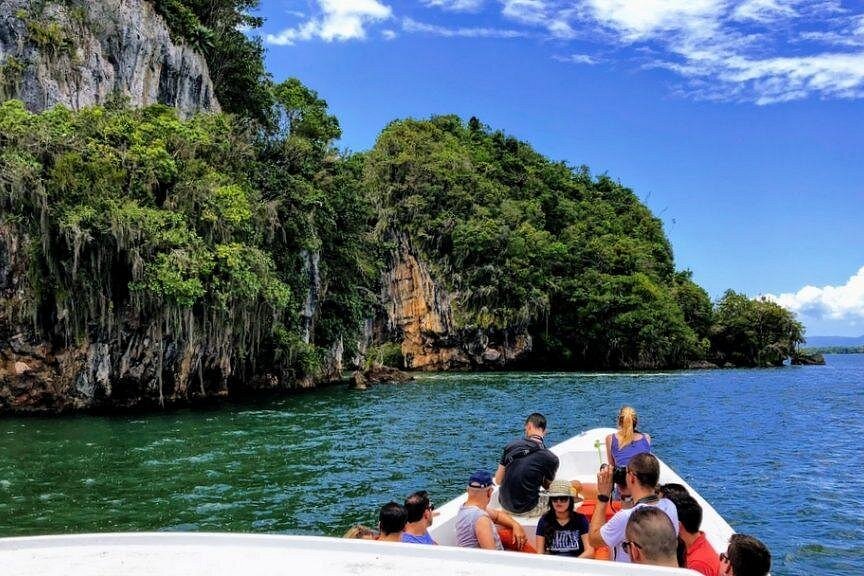
Los Haitises is commonly visited through guided boat excursions and selected nature activities.
Visitors can experience parts of the park's coastal waterways, mangroves, limestone scenery and other natural environments.
However, this does not mean that every freshwater swamp is open to tourism.
Some wetlands may be difficult to reach, ecologically sensitive or outside designated public-use areas. The availability of a particular route must be confirmed with the park authority or an authorized tour operator.
If you are interested in freshwater wetland ecology, ask your guide whether the excursion includes suitable wetland habitats and whether those locations are authorized for visits.
Responsible visitors should:
- Stay on permitted routes.
- Avoid walking through sensitive wetland vegetation.
- Never collect plants or animals.
- Keep rubbish out of the water.
- Avoid feeding or chasing wildlife.
- Follow the instructions of the guide.
The goal is to observe the natural environment without changing or damaging it.
Frequently Asked Questions
1. What is a freshwater swamp?
A freshwater swamp is a wetland with waterlogged soil and substantial woody vegetation, such as trees and shrubs adapted to wet conditions.
2. Are freshwater swamps found in Los Haitises?
Scientific research documents numerous groundwater-connected wetlands in the Los Haitises karst environment. However, a current detailed inventory of individual freshwater swamps is not established by the sources discussed in this article.
3. How are freshwater swamps different from mangroves?
Freshwater swamps are generally influenced by freshwater and groundwater, while mangroves are coastal ecosystems adapted to tidal and often saline or brackish water.
4. Does groundwater feed the wetlands of Los Haitises?
Yes. A 2013 hydrogeological study describes numerous wetlands in the park's karst environment that are linked to groundwater.
5. What plants grow in freshwater swamps?
Freshwater swamps can contain water-tolerant trees, shrubs, ferns and other moisture-loving plants. The exact vegetation depends on local water and soil conditions.
6. What animals live in freshwater swamps?
Potential wetland wildlife includes birds, aquatic organisms, insects, amphibians and reptiles. Specific species should be confirmed through local surveys.
7. Does rainfall affect swamp water levels?
Yes. Rainfall can increase surface water, saturate soils and contribute to groundwater recharge. The response differs between wetlands.
8. Why is limestone important to the wetlands?
Limestone can develop openings, depressions and underground passages that allow water to infiltrate and move through the karst system.
9. Are freshwater swamps the same as marshes?
No. Swamps generally have more woody vegetation, while marshes are usually dominated by non-woody plants such as grasses and sedges. Some wetlands contain characteristics of both.
10. Can tourists visit the freshwater swamps?
Access depends on park rules and designated visitor routes. Visitors should confirm permission before planning a visit to a particular wetland.
Conclusion
The freshwater swamp environments of Los Haitises are part of a much larger natural water system shaped by rainfall, limestone geology, groundwater and surface drainage.
Their waterlogged soils and moisture-adapted vegetation create habitats that differ from the park's coastal mangroves and open-water environments.
Scientific research has demonstrated that many wetlands in the Los Haitises karst region are connected to groundwater. This makes the protection of underground water resources an important part of wetland conservation.
Although freshwater swamps may receive less attention than the park's famous caves and mangrove channels, they contribute to the ecological diversity that makes Los Haitises National Park such a distinctive natural landscape.
Local explorer & expert guide in Samana Whale Watching Tour.